




Sunday, May 17, 2026
SAVED POSTS
  • Login
  • Register
RathBiotaClan
No Result
View All Result
  • HOME
  • HEALTH SCIENCE

    TRENDING ON HEALTH (TOP)

    Cycling Linked to Lower Dementia Risk in Study of Nearly 480,000 Adults

    First oral GLP-1 weight-loss pill approved a new era for accessible treatment

    Chewing gum releases thousands of microplastic particles directly into your mouth with every piece you chew

    Single-Cell Study of Over a Million Immune Cells Reveals Why Women Are More Prone to Autoimmune Disease

    NOW ON AIR (RBC)

    A new study has found that men’s brains shrink faster than women’s as they age.
    NEUROSCIENCE

    12,638 MRI Scans Confirm Men’s Brains Shrink Faster in PNAS Study

    May 14, 2026
    ENVIRONMENTAL SCIENCE

    Volcanic Eruptions Can Destroy Their Own Methane — Tonga’s Plume Shows How

    May 13, 2026
    3 men standing on rocky shore during daytime
    MOLECULAR BIOLOGY

    For Future Space Missions, Molecular Ecology Finally Offers a Clear Biosignature Target

    May 12, 2026
    Babies Yawn in the Womb
    DEVELOPMENTAL BIOLOGY

    Scientists Say Babies May Learn to Yawn Before Birth

    May 11, 2026
  • NEUROSCIENCE
    • PHYSIOLOGY
    • IMMUNOLOGY
    • CANCER
  • DISCOVERIES
    • SPOTLIGHTS
    • STUDENT PORTAL
    • SCIENCE FEATURED
  • MOLECULAR BIOLOGY
    • GENETICS
    • BIOTECHNOLOGY
    • BIOINFORMATICS
    • BIOCHEMISTRY
    • BIOPHYSICS
  • ZOOLOGY & ECOLOGY
    • ENVIRONMENTAL SCIENCE
    • ECOLOGY
    • EVOLUTION
  • MICRO & PLANT SCIENCE
    • MICROBIOLOGY
    • CELL BIOLOGY
    • DEVELOPMENTAL BIOLOGY
  • PSYCHOLOGY
RathBiotaClan
RathBiotaClan
No Result
View All Result
Home STUDENT PORTAL

Air Breathing Fishes Evolutionary Adaptations

Shibasis Rath by Shibasis Rath
December 22, 2024
in STUDENT PORTAL
Reading Time: 6 mins read
0
A A
0

Air breathing fishes have developed diverse air-breathing organs (ABOs) for drawing oxygen from the surface of the water but maintain gills, pumped by cranial muscles, for a variable fraction of their oxygen needs, depending on species and conditions, and for excretion of most of their carbon dioxide. Many facultative air breathers, such as the tarpon (Megalops cyprinoides), rely on gill ventilation and restrict blood flow to the ABO in normoxic water but increase rates of air breathing and perfusion of the ABO with hypoxic exposure and particularly during exercise.

During these periods, opercular beating becomes imperceptible, indicating cessation of effective gill breathing or a switch to ram ventilation while swimming. Access to air reduces the lactic acid load during burst swimming and prolongs aerobic exercise in tarpon; however, they are able to repay an accumulated oxygen debt during recovery by increased rates of gill ventilation.

In all air-breathing fish, gulping of air at the water surface is achieved through the action of the same muscles as used for feeding or for forced ventilation in water-breathing fishes. These are elements of the jaw musculature, innervated by cranial nerve V, together with the hypobranchial musculature, innervated by occipital and anterior spinal nerves. They work together in a coordinated action either for feeding or for gulping air, actions that are independent of the visceral arches and may derive from their separate evolutionary origins as feeding muscles.

In the primitive ray-finned (actinopterygian) fish, the bowfin (Amia calva), which uses a well-vascularized swim bladder as an ABO, there seem to be two types of air breath, one that involves exhalation followed by inhalation (designated type I air breaths) and one that simply involves inhalation (type II air breaths). Type I breaths are possibly respiratory in nature, whereas type II breaths have a buoyancy-regulating function.

ADVERTISEMENT

Spectral analysis indicates an inherent rhythmicity to type I (i.e., respiratory-related) air breathing, both in normoxia and hypoxia that may be driven by the changes in blood O₂ status during the interbreath interval, rather than by an RRG for air breathing. Control of the switch between ventilation of the gills and the ABO is likely to relate to stimulation of chemoreceptors by reduced oxygen levels at the gills or in the ABO. However, the central sites responsible for control of air-breathing reflexes in fish are still unknown.

READ ALSO

Comparative and Functional Genomics Notes Bioinformatics (UNIT 3) Paper 802

Unit 5 – Biological Database Management (804) (IMSC BIOINFORMATICS) Full Notes

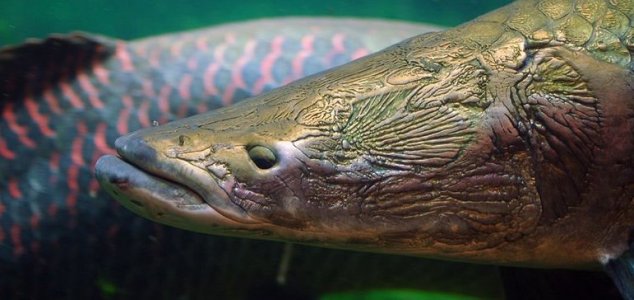
CNS associated with the evolution of air breathing fishes
a fish with a fish in the water

Reorganization of the CNS associated with the evolution of air breathing has been poorly studied in fish. Air-breathing fish belonging to the class Actinopterygian have, likely, an RRG for gill ventilation which is located in the RF of the hindbrain as in water-breathing fish. In the bowfin, catecholamine infusion stimulates gill ventilation apparently via a central mechanism but has no effect on air breathing either at normoxia or hypoxia, suggesting that the central sites governing gill ventilation and air breathing are pharmacologically and possibly spatially distinct.

ADVERTISEMENT

However, the events sequence associated with air breathing in the bowfin suggests that the action of air breathing would require little change in the pattern of neural control required for suction feeding and/or coughing. The only exception is the control over opening of the glottis at the entrance to the ABO. Neural tracers showed that the ABO in the bowfin is innervated by vagal motor neurons that may supply the glottis or smooth muscle in the walls of the ABO.


An isolated brainstem preparation from the long-nosed gar (Lepisosteus osseus) showed two distinct motor patterns in fictive respiratory activity recorded from the root of the Vth cranial nerve, a high-frequency, low-amplitude pattern associated with gill breathing and a low-frequency, high-amplitude pattern associated with ventilation of the lung during air breathing. This latter activity was associated with phasic activation of the Xth cranial nerve. The differing motor patterns and recruitment of vagal motoneurons suggest the presence of two oscillators.

ADVERTISEMENT

There may be distinct derivations for air-pumping mechanisms in actinopterygian fishes and the lobe-finned (sarcopterygian) lungfish along with their evolutionary cousins, the amphibians. However, both employ the same sets of muscles to pump air into the lung, and hence may share the same central oscillators.
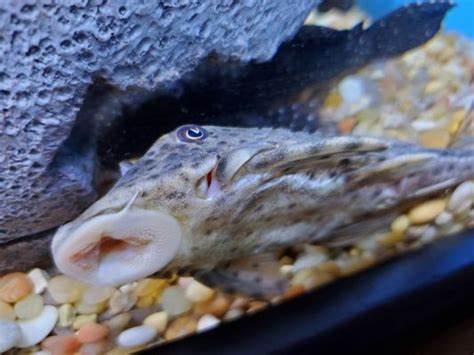
a fish that is sitting on a rock

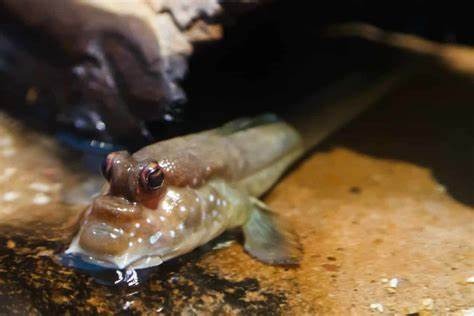
African lungfish (Protopterus aethiopicus) may have two distinct central rhythm generators, one for gill ventilation and the other for air breathing. The pattern of airflow in the breathing cycles of lungfish and amphibians, such as bullfrogs, is essentially similar. In amphibians, there is evidence that evolution of air-breathing rhythms may have required a new motor pattern in the CNS rather than one evolved from progressive modification of the branchial rhythm generator.

Episodic breathing rhythms were recorded from an isolated brainstem of a bullfrog, implying that they are generated centrally in the absence of patterned inflow from receptors. Microinjection of glutamate into rostral areas of the bullfrog-isolated brainstem in an area of the RF that corresponds to that identified as responsible for respiratory rhythmogenesis in fetal mammals caused brief breathing episodes. It seems that the neural networks associated with respiratory rhythmogenesis have been well conserved during vertebrate evolution.

Summary

Respiratory rhythmogenesis resides in the brainstem of all vertebrates, including fish, and the isolated medulla oblongata can generate a respiratory rhythm. However, the site of the primary generator is poorly defined, and its activity is modulated by centers in the midbrain and stabilized by peripheral inputs from mechanoreceptors on the gills. The respiratory rhythm in fish may become episodic or cease completely during ram ventilation.

When oxygen demand is high, feeding muscles can be recruited into the respiratory cycle to provide active inspiration of water during the mouth-opening phase. Air-breathing fish utilize the same muscles to gulp air at the water surface. There is some evidence of separate RRGs for water and air breathing, but their properties and locations are unclear.

Follow This Encyclopedia For More Detailment :

ENCYCLOPEDIA OF FISH PHYSIOLOGY: FROM GENOME TO ENVIRONMENT


ANTHONY P. FARRELL


Department of Zoology,


University of British Columbia,


Vancouver, BC, Canada

  • Share on WhatsApp (Opens in new window) WhatsApp
  • Share on Facebook (Opens in new window) Facebook
  • Share on Reddit (Opens in new window) Reddit
  • Share on X (Opens in new window) X
  • Print (Opens in new window) Print
Shibasis Rath

Shibasis Rath

"𝓒𝓸𝓷𝓷𝓮𝓬𝓽𝓲𝓷𝓰 𝓡𝓮𝓼𝓮𝓪𝓻𝓬𝓱 𝓣𝓸 𝓡𝓮𝓪𝓵𝓲𝓽𝔂" 𝓲𝓼𝓷'𝓽 𝓙𝓾𝓼𝓽 𝓪 𝓜𝓸𝓽𝓽𝓸 - 𝓘𝓽'𝓼 𝓜𝔂 𝓜𝓲𝓼𝓼𝓲𝓸𝓷

Related Posts

notes on paper 802 bioinformatics msc unit 3
BIOINFORMATICS

Comparative and Functional Genomics Notes Bioinformatics (UNIT 3) Paper 802

February 22, 2026
Unit 5 - Biological Database Management (804) (IMSC BIOINFORMATICS) Full Notes
BIOINFORMATICS

Unit 5 – Biological Database Management (804) (IMSC BIOINFORMATICS) Full Notes

February 15, 2026
Unit 1 - Biological Database Management (804) (IMSC BIOINFORMATICS) Full Notes
BIOINFORMATICS

Unit 4 – Biological Database Management (804) (IMSC BIOINFORMATICS) Full Notes

February 15, 2026

POPULAR NEWS

Chewing gum releases thousands of microplastic particles directly into your mouth with every piece you chew

Chewing gum releases thousands of microplastic particles directly into your mouth with every piece you chew

by Shibasis Rath
May 8, 2026
0

Microplastics are turning up in places researchers never expected: deep-sea sediments, Arctic ice, and human blood. Now, a UCLA pilot...

Yelling Isn’t Just Yelling: How a Hostile Home Rewires a Child’s Brain for Constant Alert

Yelling Isn’t Just Yelling: How a Hostile Home Rewires a Child’s Brain for Constant Alert

by Shibasis Rath
March 8, 2026
0

To a parent in the heat of the moment, a raised voice may feel like simple frustration. To a child...

a group of gen Z kids walking down a street

Is Gen Z the First Generation Less Intelligent Than Their Parents?

by Shibasis Rath
February 5, 2026
0

Gen Z intelligence decline is emerging as a serious concern among neuroscientists and education researchers. For over a century, each...

Whole Brain Emulation Achieved: Scientists Run a Fruit Fly Brain in Simulation

by Shibasis Rath
March 9, 2026
0

Scientists have copied an entire biological brain neuron by neuron and synapse by synapse and made it control a simulated...

Global Sperm Counts Have Dropped 50% in 50 Years Now 128 Men Are Racing Their Way to a $100,000 Prize to Prove the Point

Global Sperm Counts Have Dropped 50% in 50 Years Now 128 Men Are Racing Their Way to a $100,000 Prize to Prove the Point

by Staff Writer
May 5, 2026
0

A group of technology entrepreneurs is staging a competitive event in San Francisco in which semen samples from 128 men...

EDITOR CHOICE‘S

  • All
  • NEWS
  • SPOTLIGHTS
A new study has found that men’s brains shrink faster than women’s as they age.

12,638 MRI Scans Confirm Men’s Brains Shrink Faster in PNAS Study

by Staff Writer
May 14, 2026
0

A large-scale analysis of brain scans taken over time has found that men's brains shrink faster than women's across a...

Volcanic Eruptions Can Destroy Their Own Methane — Tonga’s Plume Shows How

Volcanic Eruptions Can Destroy Their Own Methane — Tonga’s Plume Shows How

by Shibasis Rath
May 13, 2026
0

A study published in Nature Communications analyzed the Hunga Tonga-Hunga Ha'apai volcano eruption's impact on methane in the atmosphere. It...

3 men standing on rocky shore during daytime

For Future Space Missions, Molecular Ecology Finally Offers a Clear Biosignature Target

by Shibasis Rath
May 12, 2026
0

When the next generation of probes scoops up dust from the icy shell of Europa or the surface of Mars,...

Babies Yawn in the Womb

Scientists Say Babies May Learn to Yawn Before Birth

by Shibasis Rath
May 11, 2026
0

Mothers can spread yawns to their yet-to-be-born offspring during pregnancy, researchers report May 5 in Current Biology  the first empirical evidence...

ADVERTISEMENT

RathBiotaClan – RBC

RathBiotaClan – Connecting Research To Reality

Your trusted source for life science news, biology research & discoveries. Covering neuroscience, genetics, ecology, and more — connecting research to reality.

Privacy Policies

Contact Us

About Us

Editorial Standards

Latest Posts

  • 12,638 MRI Scans Confirm Men’s Brains Shrink Faster in PNAS Study
  • Volcanic Eruptions Can Destroy Their Own Methane — Tonga’s Plume Shows How
  • For Future Space Missions, Molecular Ecology Finally Offers a Clear Biosignature Target
  • Scientists Say Babies May Learn to Yawn Before Birth

SHIBASIS RATH

Contact Mail

rathbiotaclan@gmail.com

No Result
View All Result
MSME (Udyam) Certified Science Platform
Govt. of India

Get Us On PlayStore

playstore app for rathbiotaclan
  • About Us
  • Advertise With Us
  • Cancellation and Refund Policy
  • Contact Us
  • Contribute
  • Editorial Standards
  • Home
  • Pricing Details
  • Privacy Policies
  • Shipping Policy
  • Terms & Conditions

© 2026 RathBiotaClan. All rights reserved.

Welcome Back!

Sign In with Google
OR

Login to your account below

Forgotten Password? Sign Up

Create New Account!

Sign Up with Google
OR

Fill the forms bellow to register

*By registering into our website, you agree to the Terms & Conditions and Privacy Policy.
All fields are required. Log In

Retrieve your password

Please enter your username or email address to reset your password.

Log In

Add New Playlist

No Result
View All Result
  • HOME
  • HEALTH SCIENCE
  • NEUROSCIENCE
    • PHYSIOLOGY
    • IMMUNOLOGY
    • CANCER
  • DISCOVERIES
    • SPOTLIGHTS
    • STUDENT PORTAL
    • SCIENCE FEATURED
  • MOLECULAR BIOLOGY
    • GENETICS
    • BIOTECHNOLOGY
    • BIOINFORMATICS
    • BIOCHEMISTRY
    • BIOPHYSICS
  • ZOOLOGY & ECOLOGY
    • ENVIRONMENTAL SCIENCE
    • ECOLOGY
    • EVOLUTION
  • MICRO & PLANT SCIENCE
    • MICROBIOLOGY
    • CELL BIOLOGY
    • DEVELOPMENTAL BIOLOGY
  • PSYCHOLOGY
  • Login
  • Sign Up
SAVED POSTS

© 2026 RathBiotaClan. All rights reserved.

This website uses cookies. By continuing to use this website you are giving consent to cookies being used. Visit our Privacy and Cookie Policy.